


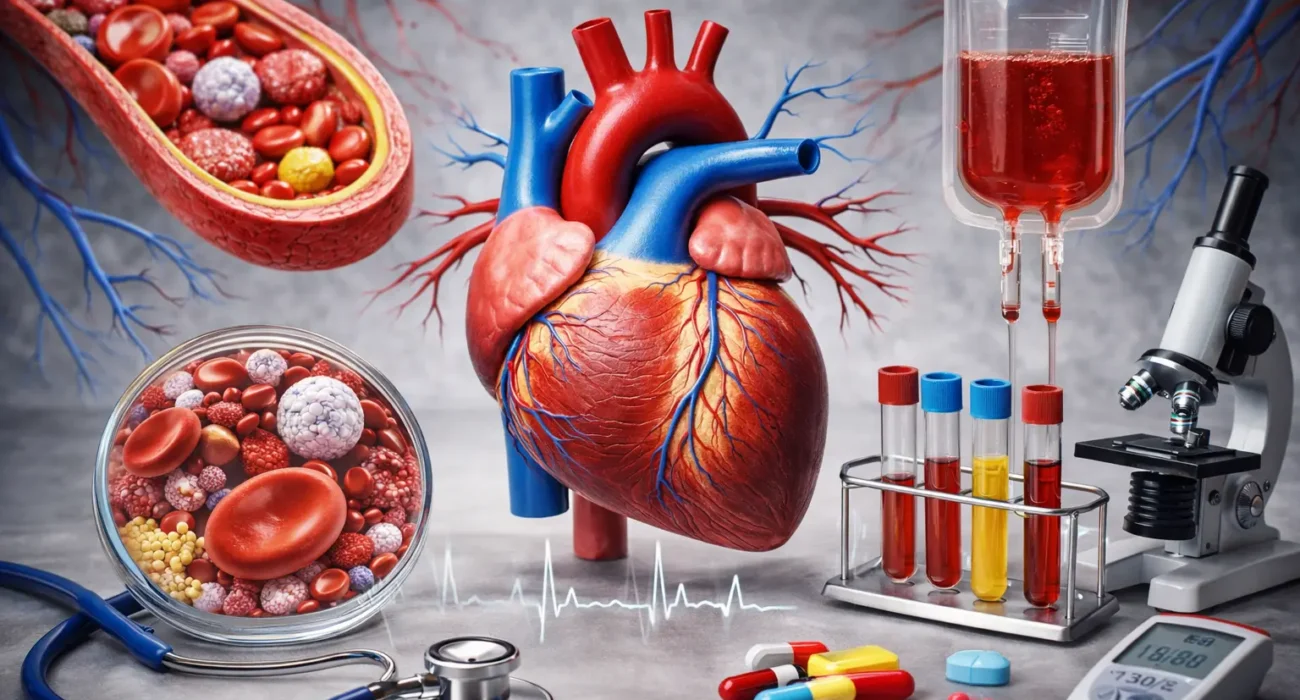
Body Fluids and Circulation NEET Notes 2026 – Important Points, Tricks, Mnemonics & MCQs
1. Most Important Points to Remember (HighYield for NEET)
1️⃣ Blood Composition
Blood = Plasma (55%) + Formed elements (45%)
Plasma
- 90–92% water
- 6–8% proteins
- Major plasma proteins:
- Fibrinogen → clotting
- Globulin → immunity
- Albumin → osmotic balance
⚠ Trick to remember:
FGA = Fight, Guard, Adjust
- Fibrinogen → Forms clot
- Globulin → Guards body
- Albumin → Adjusts osmotic pressure
2️⃣ Formed Elements
RBC (Erythrocytes)
Key facts for NEET:
| Features | Value |
|---|---|
| Count | 5-5.5 million/mm3 |
| Life Span | 120 Days |
| Formation | Red Bone Marrow |
| Destruction | Spleen (Graveyard of RCBs) |
Function: Transport O₂ and CO₂ via haemoglobin.
WBC (Leucocytes)
Count: 6000–8000/mm³
Types:
Granulocytes
- Neutrophils (60–65%)
- Eosinophils (2–3%)
- Basophils (0.5–1%)
Agranulocytes
- Lymphocytes (20–25%)
- Monocytes (6–8%)
Mnemonic:
Never Eat Bad Lunch Monday
- N – Neutrophils
- E – Eosinophils
- B – Basophils
- L – Lymphocytes
- M – Monocytes
Platelets
- Count: 1.5–3.5 lakh/mm³
- Function: Blood clotting
Produced from megakaryocytes.
3️⃣ Blood Groups (Very Frequently Asked)
ABO Blood Group System
| Blood Group | Antigen | Antibody |
|---|---|---|
| A | A | Anti-B |
| B | B | Anti-A |
| AB | A+B | none |
| O | none | Anti-A and Anti-B |
Important NEET Facts:
- O → Universal Donor
- AB → Universal Recipient
Mnemonic:
- O Gives All
- AB Takes All
Rh Factor
- Rh antigen present → Rh+
- Rh antigen absent → Rh−
Rh Incompatibility
Disease:
Erythroblastosis Fetalis
Occurs when:
Rh mother + Rh+ fetus
4️⃣ Blood Clotting Mechanism
Sequence (NEET favourite):
Prothrombin → Thrombin
Fibrinogen → Fibrin
Key factor:
Calcium ions essential
Simple trick:
PTF Rule
- P → Prothrombin
- T → Thrombin
- F → Fibrin
5️⃣ Lymph
Features:
- Colourless fluid
- Contains lymphocytes
- Transports fats
Important NEET point:
Lacteals absorb fats
6️⃣ Types of Circulatory System
| Type | Example |
|---|---|
| Open | Arthropods |
| Closed | Vertebrates |
7️⃣ Heart Evolution (Very Important)
| Organism | Chambers |
|---|---|
| Fish | 2 |
| Amphibians | 3 |
| Reptiles | 3 |
| Crocodile | 4 |
| Birds | 4 |
| Mammals | 4 |
Mnemonic:
- Fish → 2
- Amphibian → 3
- Reptile → 3
- Bird & Mammal → 4
8️⃣ Human Heart (Very Important)
Heart chambers:
- Right Atrium
- Right Ventricle
- Left Atrium
- Left Ventricle
Valves:
| Valve | Position |
|---|---|
| Tricuspid | RA-RV |
| Bicuspid | LA-LV |
| Semilunar | Aorta and Pulmanory artery |
9️⃣ Pacemaker of the Heart
Pacemaker = Sinoatrial Node (SAN)
Reason:
Highest rate of impulse generation 70–75/min.
10️⃣ Cardiac Cycle (VERY IMPORTANT)
Duration:
0.8 seconds
Heart rate:
72 beats/min
Stroke Volume:
70 ml
Cardiac Output Formula:
\text{Cardiac Output} = \text{Stroke Volume} \times \text{Heart Rate}
Normal cardiac output:
≈ 5 litres/min
11️⃣ Heart Sounds
| Sound | Cause |
|---|---|
| Lub | Closure of AV Valves |
| Dub | Closure of Semilunar Valves |
12️⃣ ECG Waves
| Wave | Meaning |
|---|---|
| P Wave | Atrial Depolarization |
| QRS | Ventricular Depolarization |
| T Wave | Ventricular Repolarization |
Major Mistakes Students Make in This Chapter
Mistake 1
Confusing plasma and serum
Correct:
Serum = Plasma − Clotting factors
Mistake 2
Wrong RBC count
Correct:
5–5.5 million/mm³
Mistake 3
Confusing universal donor
Correct:
O group
Mistake 4
Thinking pacemaker = AV node
Correct:
SAN
Mistake 5
Misunderstanding cardiac cycle duration
Correct:
0.8 seconds
Quick Revision Tricks for NEET
Trick for WBC functions
NEBLM
- Neutrophil → phagocytosis
- Eosinophil → allergy
- Basophil → histamine
- Lymphocyte → immunity
- Monocyte → macrophage
Heart Valve Trick
Try Pulling My Aorta
T → Tricuspid
P → Pulmonary
M → Mitral
A → Aortic
Analytical NEET Level Questions
Question 1: Which blood group can donate blood to all groups?
- A
- B
- O
- AB
Answer: C
Question 2: The pacemaker of heart is:
- AV node
- SA node
- Purkinje fibers
- Bundle of His
Answer: B
Question 3: Correct sequence of blood clotting:
- Prothrombin → Thrombin → Fibrinogen
- Fibrinogen → Fibrin → Prothrombin
- Prothrombin → Thrombin → Fibrin
- Thrombin → Prothrombin → Fibrin
Answer: C
Question 4: Which WBC is most abundant?
- Basophil
- Neutrophil
- Monocyte
- Lymphocyte
Answer: B
Expected NEET Questions From This Chapter (2026)
Most probable topics:
1️⃣ Blood groups
2️⃣ Cardiac cycle
3️⃣ ECG waves
4️⃣ SAN pacemaker
5️⃣ Double circulation
6️⃣ WBC functions