






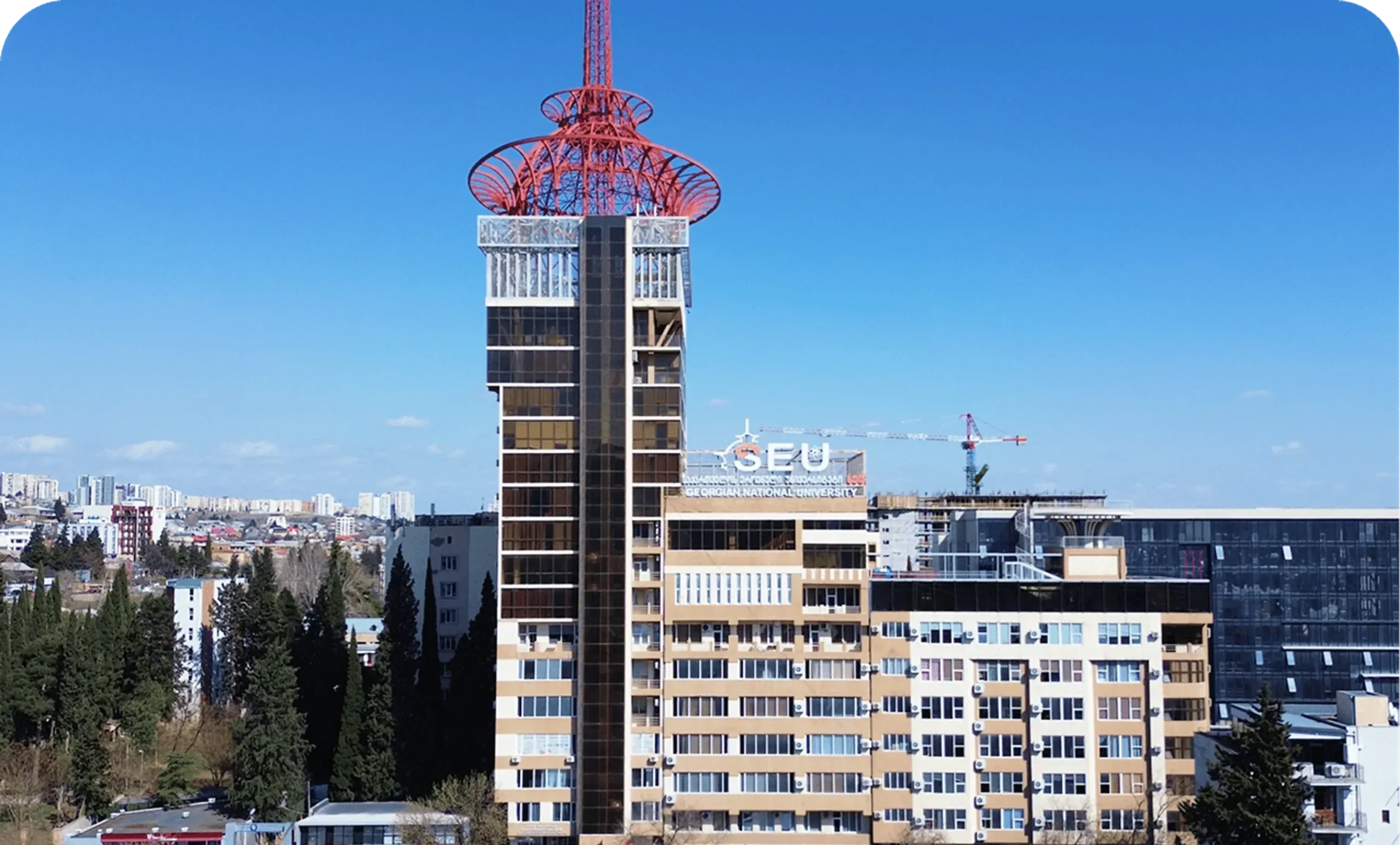



Study MBBS at Georgian National University SEU, Tbilisi, Georgia

Build a successful medical career at a leading private medical university.


Why Choose Georgian National University SEU?

About Georgian National University SEU, Georgia

Georgian National University SEU is a prominent private university located in Tbilisi, Georgia. It is recognized as the largest private higher education institution in the country, hosting between 8,000 to 11,000 students. The university strongly emphasizes a modern, international educational outlook, offering various programs fully in English to attract a diverse global student body.

Key Facts

Academic Programs and Infrastructure

Student Life and Facilities

mbbs from Georgian National University SEU, Tbilisi, Georgia
georgian-national-university-seu-campus-3

Key Highlights of Georgian National University SEU

Aspects Details
University Name Georgian National University SEU
Founded Year 2001
Course MBBS MD (6-years program)
Address 9 Tsinandali Street, Tbilisi City, Isani-Samgori District, 0144, Georgia
Key Recognitions NCEQE (Georgia), WHO/WDOMS, NMC(India), ECFMG and USMILE (USA), PLAB(UK), MCCQE(Canada)
Credit System European Credit Transfer and Accumulation System (ECTS)
National Ranking #16th in Georgia
Global Ranking #9150th Globally (QS Europe 2024: 701-750)
Total Students 8000-11000 Students
International Students 1000+ to 5000+ (Mainly from India, Turkey, Azerbajjan, Iran)
Campus Size 85000 square meters (With Simulation Clinic, Labs, and AI Data Science Labs)
Temperature/Climate Summer exceeds 30 Degree Celcius, Winter averages 2-8 Degree Celcius (Mild Microclimate)

Accreditations and Global Recognition of SEU Medical Program

The medical program (MD/MBBS equivalent) at Georgian National University SEU holds prestigious approvals, certifications, and listings from leading national and international medical regulatory bodies. This comprehensive global framework ensures that degrees are valid worldwide and opens clear pathways for licensing exams across multiple continents.

Accredited and recognized by the Ministry of Education and Science of Georgia / NCEQE

Listed in the World Directory of Medical Schools (WDOMS / WHO), making it eligible for international licensing exams and recognitions.

Recognized by the National Medical Commission (NMC) of India, allowing graduates to sit for FMGE/NExT.

Eligible for ECFMG certification and USMLE pathways in the USA and for registration exams like PLAB (UK) and MCCQE (Canada), subject to respective requirements.

The MD degree from SEU follows the European Credit Transfer and Accumulation System (ECTS) and is taught in English, with clinical exposure and modern training facilities.

Teaching Faculty and Faculty Characteristics

Fergana Medical Institute features a highly experienced teaching faculty of trained educators, expert professors, and specialized instructors with extensive medical expertise. As an institution delivering high-quality academic instruction, the university provides both theoretical knowledge and practical training to effectively develop local and foreign healthcare specialists.

Faculty characteristics

  • International experience: Faculty includes both Georgian and foreign practicing lecturers who have in-depth knowledge relevant to local and international job markets.
  • Practical focus: Instructors use modern and innovative methods, often incorporating real-life projects, professional ethical values, and simulated clinical environments into the teaching process.
  • Emphasis on skills: Teaching is designed to develop professional skills, often through student participation in scientific conferences, internships, and training programs.
  • Alignment with standards: The curriculum and teaching are designed in line with both national and international standards.

Examples by faculty

  • Faculty of Medicine: Features professors with many years of clinical experience, with some members undergoing continuous professional development at clinics worldwide.
  • Faculty of Business and Technology:Led by highly qualified Georgian and foreign practicing lecturers who ensure programs meet the requirements of local and international labor markets.
  • Faculty of Social Sciences:Utilizes practicing lecturers who teach using modern and innovative methods to develop skills in social sciences, psychology, and international relations.

RANKING & PASSING RATIO

National Ranking: #16 in Georgia #9150 in Globally

Global Ranking

Georgian National University SEU does not have a specific QS World University Ranking for 2025. Some sources mention it was ranked 587th by QS for 2025, while others provide rankings from different years or mention a QS World University Rankings: Europe bracket of 701–750 in the 2024 rankings. Overall, SEU is often ranked among the top universities in Georgia and has been improving its global standing

mbbs from Georgian National University SEU, Tbilisi, Georgia

Passing Ratio

The passing ratio for Georgian National University (SEU) on the FMGE (Foreign Medical Graduate Examination) varies across different sources, with some citing it as high as 60.39% and others as low as 47% or 29%.mentions a 60% passing rate, while other sources provide different percentages from the same or different exam years. The specific passing percentage depends on the year and the data source used.

Aspects Details
University Name Georgian National University SEU
Founded Year 2001
Ranking Country Ranking: #16 in Georgia, #9150 in Globally
World Ranking: Georgian National University SEU does not have a specific QS World University Ranking for 2025. Some sources mention it was ranked 587th by QS for 2025, while others provide ranking from different years or mention a QS World University Ranking: Europe bracket of 701-750 in the 2024 ranking. Overall, SEU is often ranked among the top universities in Georgia and has been improving its global standing.

Climate and Seasonal Temperature Profile of Georgian National University SEU

Key Seasonal Information

  1. Summer (June-August): Hot, with temperatures often exceeding 30°C (86°F). July is the hottest month.
  2.  Winter (December-February): Moderately cold, with average daytime temperatures between 2-8°C and nighttime temperatures near or below freezing. Snow is possible but not constant in the city.
  3.  Spring and Autumn (March-May and September-November): These transitional seasons offer mild and pleasant temperatures, making them popular times to visit.

Overall, the city enjoys a relatively mild microclimate due to the surrounding mountain ranges blocking cold air masses from the north.

Foreign Student Information

Bashkir State Medical University (BSMU) stands out as a leading Russian higher education institution
recognized for its highly diverse campus and extensive global community.

The university has about 8,000–11,000 total students studying in different faculties.

 Among them, around 1,000+ international students are enrolled.

 Some education sources report over 5,000 international students in different programs, showing that the number has been increasing as the university attracts more foreign applicants.


Countries of Foreign Students

International students mainly come from:

India

Nigeria

Turkey

Azerbaijan

Iran

Several Asian, African, and European countries studying medicine, business, and IT programs.

Let’s Figure Out the Right Medical Path for
Your Child Together


Stop guessing your way through complex college admissions and subject streams. Connect with our experts today for flexible online or offline counselling sessions. Get a clear, honest, and stress-free roadmap toward a successful medical career for your child.